How Do I Protect My Business Name in the UK
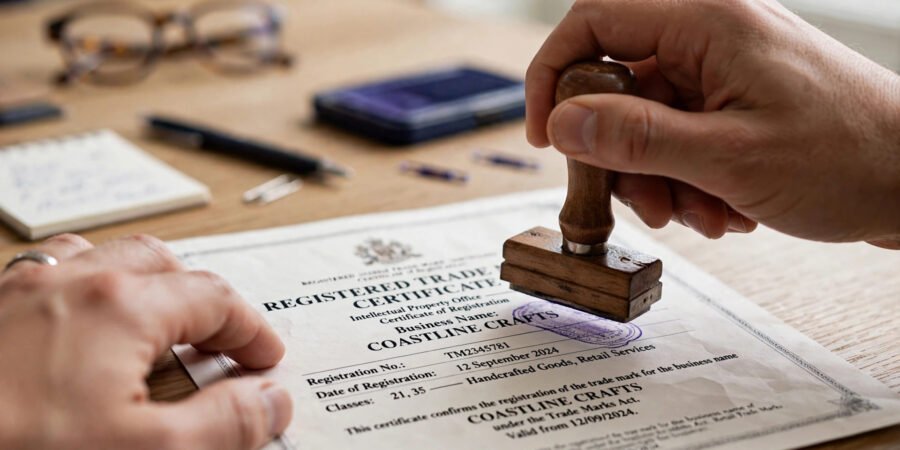
How do I protect my business name in the UK? You’ve found the perfect name, and now the fear: someone else nabs it, or worse, you build a brand on a name you don’t own. Here’s the thing most new businesses learn too late: registering with Companies House does NOT protect your name as a brand. Here’s what actually does.
How Do I Protect My Business Name? The Layers
Layer 1 — Companies House registration: incorporating as a Ltd blocks others registering the identical company name, but “too similar” names are only blocked loosely, and it gives zero rights against someone using the name as a brand or trading name. Necessary admin, not protection.
Layer 2 — UK trade mark (the real protection): registering your name/logo as a trade mark with the UK Intellectual Property Office (UKIPO) gives you exclusive rights to use it for your goods/services classes, the ® symbol, and the power to stop infringers and domain squatters. Cost: £170 for one class, £50 per additional class online. This is the protection that counts.
Layer 3 — domains and handles: register the .co.uk and .com (and .uk) immediately — £10–£15/year each. Grab the social handles too, even ones you won’t use. Domain squatters are faster than you think; I know founders who lost their exact .com in the week between deciding the name and registering it.
Layer 4 — use it: trade marks need genuine use within 5 years or they can be revoked; and common-law “passing off” rights build through actual trading reputation. A name you use and defend beats a name you merely registered. How Do I Handle Late Paying Clients as a Freelancer
Before You Commit: Clearance Searches
Search before you fall in love with a name. Check: the UKIPO trade mark database (is it registered in your classes?), Companies House (is a similar company trading?), domain availability, social handles, and a plain Google search (is someone already trading under it with unregistered rights?). Do this BEFORE printing business cards.
The classes matter: trade marks protect specific classes of goods/services (45 classes total). Register in the classes you actually trade in plus adjacent ones you might expand into — a café (class 43) that later sells beans retail (class 30) needs both. Each extra class is £50; getting it wrong means gaps a competitor can walk through.
Descriptive names can’t be trade marked: “London Quality Plumbers” is descriptive and unregistrable; invented or distinctive names (“Zentengo”) sail through. The more distinctive the name, the stronger the protection — another reason clever branding beats generic. If the UKIPO objects, a trade mark attorney (£300–£800 for filing help) is worth it for valuable brands. GOV.UK: register a trade mark
- Companies House ≠ brand protection — trade mark does that
- UKIPO trade mark: £170 first class, £50 per extra
- Search UKIPO + Companies House + domains BEFORE committing
- Register .co.uk, .com, .uk and social handles immediately
- Distinctive names protect best; descriptive ones can’t register
Enforcing It: What If Someone Copies You?
Start soft: a polite-but-firm cease-and-desist letter resolves most small infringements — many are accidental. Template letters from IP solicitors cost little; the trade mark certificate does most of the talking. Domain disputes: Nominet’s DRS handles .uk disputes cheaply and effectively against cybersquatters when you hold the trade mark.
Escalation: the Intellectual Property Enterprise Court (IPEC) handles smaller IP claims with capped costs (£25k) — designed for SMEs, far less scary than High Court. Most disputes never reach court; the registered right plus a solicitor’s letter ends them.
Ongoing: set up Google Alerts for your brand name, watch the UKIPO journal for conflicting applications (you can oppose them within 2 months of publication — £100–£200), and renew the trade mark every 10 years (£200). Protection isn’t a one-time purchase; it’s a small ongoing habit. Total cost of proper protection: under £300 upfront. The cost of not doing it: rebranding mid-growth, which runs to thousands and torches your goodwill. What Are the Cheapest Ways to Market a Small Business in the UK UK Intellectual Property Office
International Protection: When the UK Isn’t Enough
A UK trade mark protects the UK. Selling internationally? EU trade mark (EUTM) covers all EU states in one filing (~€850 for one class) — essential if you sell into Europe. US: file with the USPTO (~$250–$350 per class) — the US is first-to-use in practice but registration is the real protection. The Madrid Protocol lets you extend a UK registration to 130+ countries via one WIPO application — cost-effective once you’re in 3+ markets.
Priority timing matters: your UK filing date gives you a 6-month priority window to file abroad and backdate the foreign rights — use it if international expansion is on the roadmap. Domain-wise: secure the key country domains (.de, .fr, .com as minimum) before you need them. International IP protection feels premature until the day a foreign copycat appears — and then it’s urgent and expensive. File in your next 1–2 target markets early; it’s a few hundred pounds that prevents a five-figure fight.
Top Tips at a Glance
- Trade mark = the protection; Companies House = admin
- £170–£270 covers most small businesses properly
- Clearance search BEFORE you commit to the name
- Domains + handles on day one — squatters are fast
- Google Alerts + journal watch = ongoing defence
Frequently Asked Questions
Does registering a limited company protect my business name?
Only weakly — it blocks identical company registrations but gives no brand rights. A UK trade mark is the real protection.
How much does a UK trade mark cost?
£170 for one class plus £50 per additional class when filed online with the UKIPO. Most small businesses need 1–3 classes.
Can I trade mark a descriptive business name?
Generally no — purely descriptive names (‘Best London Plumbers’) can’t be registered. Distinctive, invented names get the strongest protection.
How long does a UK trade mark last?
10 years, renewable indefinitely for £200 per renewal. But you must genuinely use it within 5 years of registration or it can be revoked for non-use — a registered-but-unused mark is vulnerable.
Final Thoughts
Protect your business name in layers: Companies House for the company, a UKIPO trade mark (£170+) for the brand — that’s the one that counts — domains and handles on day one, and clearance searches before you commit. Under £300 total for protection that would cost thousands to fix later. Do it before the business cards, not after the cease-and-desist. What is the Best Accounting Software for UK Sole Traders