Selling Your House Without an Estate Agent in Manchester
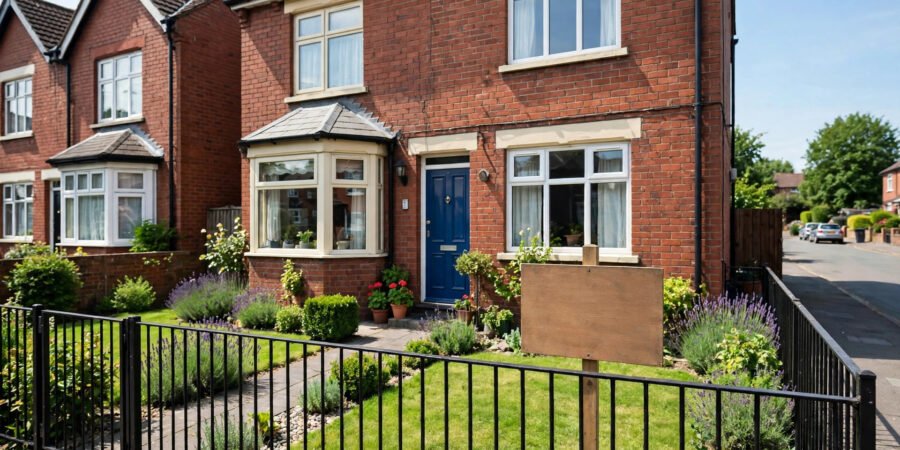
Estate agent fees in Manchester typically run 1–1.5% + VAT — £3,000–£4,500 on a £300,000 sale — for work many sellers feel capable of doing themselves. And they are right, up to a point: pricing, photographing, listing and viewing a home are learnable skills. The question is not whether you can sell without an agent, but whether the saving survives the costs and risks of doing it.
This guide covers how to sell your house without an estate agent in Manchester: the private-sale process step by step, how to list where buyers look, pricing without an agent's data, handling viewings and offers, and an honest account of what you save versus what you risk.
The True Saving (and the True Cost)
On a £300,000 Manchester sale at 1.25% + VAT, the agent costs £4,500. Selling privately, you will still spend: portal listing fees (£100–£500 via online agents that list on Rightmove/Zoopla — note the portals generally require agent listing, so pure-private sellers use alternatives), professional photography (£150–£300, worth every penny), floor plans (£50–£100), For Sale board (£50), EPC (£60–£120, legally required), and your solicitor (£800–£1,200). Realistic private-sale cost: £1,200–£2,500, saving roughly £2,000–£3,300.
The hidden costs are time and expertise: fielding enquiries, conducting viewings (including no-shows), qualifying buyers, negotiating, and managing the chain. Agents also filter timewasters and keep chains moving — chain management is the unglamorous work that prevents collapses. Value your time honestly: if selling takes 40 hours of your life, the saving needs to exceed what those hours are worth to you.
Pricing Without an Agent's Valuation
Mispricing is the private seller's biggest risk: too high and the listing stagnates (stale listings attract low offers); too low and you donate equity. Replicate the agent's method: sold prices from the Land Registry and Rightmove's sold prices for your street and postcode over the last 12 months, adjusted for condition, then cross-checked against current asking prices of genuinely comparable homes — same type, size, street, condition.
Get three free agent valuations anyway — you are not obliged to instruct them — and treat the range as data, not flattery (valuations are often pitched high to win instructions). Price at the evidence, not your hopes: in Manchester's market, correctly priced homes in Didsbury, Chorlton or Sale move in weeks; overpriced ones sit, get reduced, and sell below what correct pricing would have achieved. Adding value to your home before selling first can shift the whole price bracket.
Listing Where Manchester Buyers Look
Rightmove and Zoopla dominate buyer attention but list via agents — which is why many private sellers use fixed-fee online agents (£500–£1,000) that provide portal access plus photos and floor plans while you handle viewings. Pure-private options: OnTheMarket (agent-listed but worth monitoring for comparables), Facebook Marketplace and local Manchester property groups (surprisingly effective for flats and terraces), Gumtree, and dedicated private-sale sites.
Your listing must match agent quality: professional photos (decluttered, daylight, wide angles — or hire the photographer), an honest floor plan, a description that leads with the three best features and includes transport links, schools and parking, and a clear asking price with tenure stated. The cost of repainting a three-bedroom house is worth checking — £1,000 of fresh neutral paint routinely photographs as £5,000 of value.
Viewings, Offers and Negotiation
Run viewings like an agent: accompanied, pre-qualified (ask about mortgage agreement in principle and chain position before booking), batched into open-house slots to create competition, with the house clean, lit and smelling neutral. Never leave viewers unaccompanied, and never accept an offer without proof of funds or mortgage AIP and solicitor details — private sellers are prime targets for timewasters and, occasionally, fraudsters scouting empty homes.
Negotiate on evidence: know your floor price before the first viewing, respond to offers within 24 hours, and treat every offer as the start of a conversation about position (chain-free cash buyer at £5k under asking often beats a top offer in a shaky chain). Get everything in writing via email. And remember the legal line: you must not misdescribe the property — the Consumer Protection from Unfair Trading Regulations apply to private sellers too.
The Legal Work: Solicitor Territory
Do not skimp here: instruct a solicitor or licensed conveyancer at the point of listing, not after accepting an offer — having contracts and the TA6 property information form ready shortens the sale by weeks. Your solicitor drafts the contract, handles enquiries, and manages exchange and completion; the government's guide to selling your home outlines the stages.
Prepare the paperwork buyers' solicitors will demand: FENSA certificates for windows, building control sign-off for extensions, boiler service records, electrical certificates, and leasehold information packs if applicable. Delays in private sales almost always trace to missing paperwork, not missing buyers. The agent never did this part anyway — solicitors did — so going private loses nothing here as long as you instruct early and respond to enquiries fast.
Selling your house without an estate agent in Manchester is entirely feasible: price from Land Registry sold data, list via a fixed-fee online agent for portal access, photograph professionally, qualify viewers ruthlessly, negotiate on evidence, and instruct your solicitor from day one. The saving is real — a few thousand pounds — but so is the work.
It suits organised sellers with flexible schedules and realistic pricing. If that is you, the agent's commission is yours to keep. If not, a good agent earns their fee in chain management alone — choose deliberately, not by default.
Handling Chains as a Private Seller
Chains are where private sales wobble: your buyer has a buyer, who has a buyer, and nobody is managed by an agent. The private seller's chain strategy: qualify ruthlessly at offer stage (proof of funds or mortgage AIP, solicitor instructed, their buyer's position confirmed — a chain-free buyer is worth accepting £3,000–£5,000 less), set expectations explicitly ('we are aiming for exchange in 10 weeks — can your side match that?'), and communicate weekly with everyone in the chain, not just your buyer.
When chains stall, diagnose precisely: is it the solicitor (chase daily, escalate to the firm's partner), the survey (offer to share yours), the mortgage (ask for the lender's timeline), or cold feet (a frank conversation beats weeks of silence)? Have a plan B for collapse — the next-best offer kept warm, or a bridge to rented accommodation if your onward purchase depends on the sale. Agents earn their fees in chain management; without one, you are the project manager. Run it like one: a simple spreadsheet of every party, their solicitor, and weekly status turns chaos into process.
Frequently Asked Questions
Can I list on Rightmove without an estate agent?
Rightmove and Zoopla list through agents only, but fixed-fee online agents (£500–£1,000) give you portal access while you handle viewings yourself. Pure-private sellers use Facebook, Gumtree and private-sale sites.
How much do I save selling without an estate agent?
On a £300,000 Manchester home, roughly £2,000–£3,300 after your own costs (photography, EPC, solicitor, listing fees) — versus £4,500 typical high-street fees. Value your time in the calculation.
Is it harder to sell privately?
Pricing and viewings take effort, and you lose the agent's buyer-filtering and chain management. Well-presented, correctly priced homes sell privately every week; overpriced or poorly presented ones struggle with or without an agent.
Do I still need a solicitor if I sell privately?
Absolutely — conveyancing is legal work, not sales work. Instruct a solicitor or licensed conveyancer when you list, and have contracts and property information forms ready early.

